

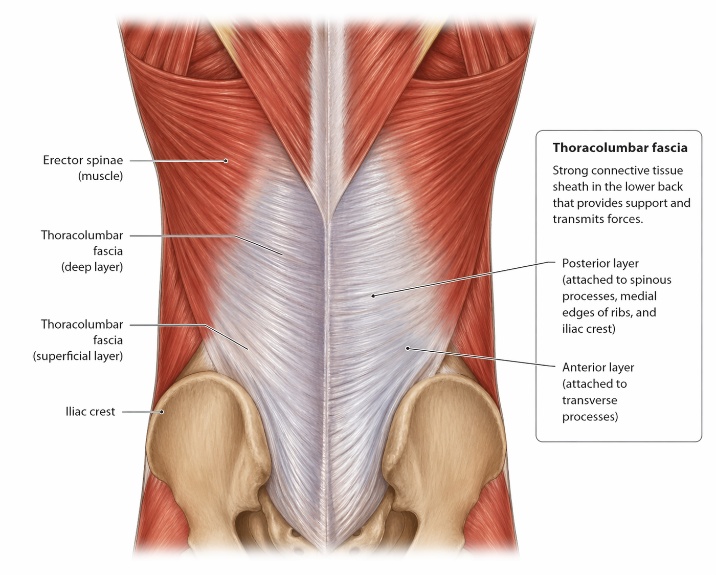
An investigation into the whole-body network of fascia and the use of Bowtech Bowen Therapy.
Have you ever wondered why females tend to experience back pain, sprains, and ligament injuries more often than males?
Recent research suggests the answer may lie in something many people have never heard of – fascia, the body’s ‘3D’ connective tissue network.
Females are statistically more likely than males to suffer from back pain and one important reason may be the influence of the hormone oestrogen. This hormone has a re-moulding effect on the female’s connective tissues. Therefore, females are more likely to suffer from: lower back pain, pelvic instability, sprains, ACL injuries and chronic muscular tension.
Oestrogen affects an enzyme called lysyl oxidase, which helps create the cross-links that make collagen strong and stable. When oestrogen levels are higher, this enzyme becomes less active, meaning the body produces:
This can make the body more flexible – but also more vulnerable to pain and injury. Women often have greater flexibility, softer ligaments, more joint mobility and increased risk of overstrain.
Whilst flexibility can be beneficial, too much can place greater stress on the: lower back, pelvis, hips, neck and shoulders.
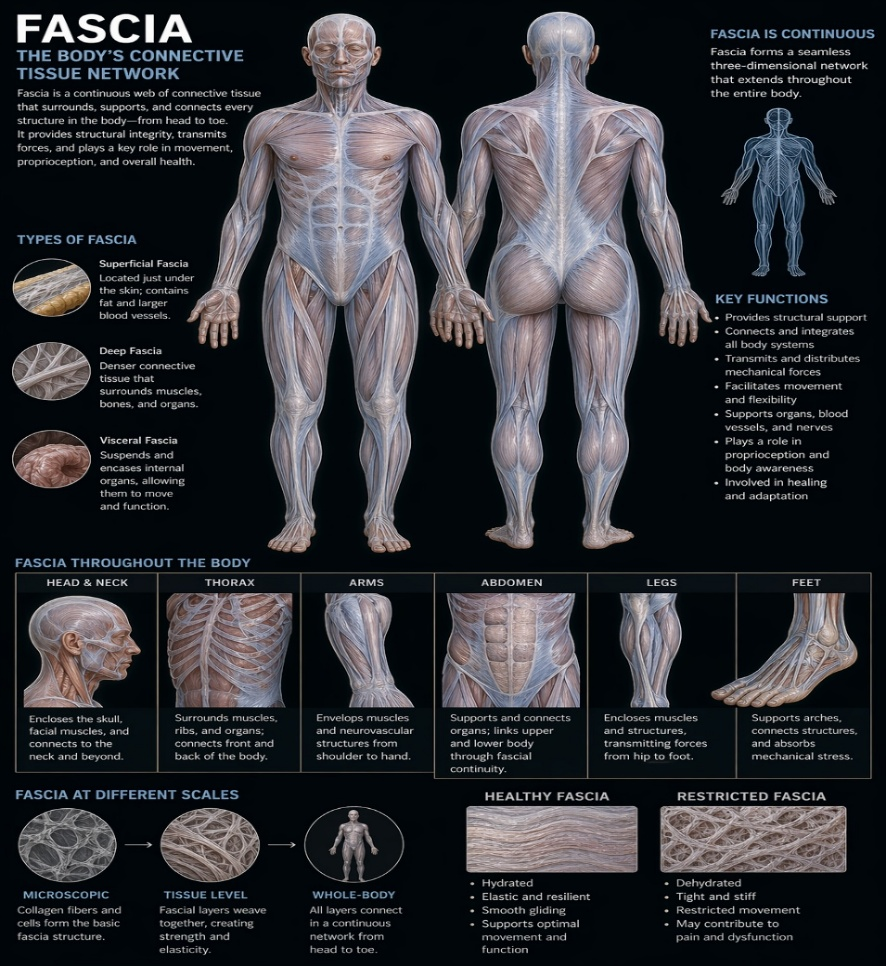
Fascia is continuous 3D web of connective tissue that surrounds muscles, joints, organs, nerves and blood vessels. It holds the body together as one integrated system.
Fascia contains a solid part mostly made up from collagen fibres that provide strength and a fluid part which is rich in hyaluronic acid that allows tissues to glide smoothly.
Together these form the extracellular matrix – the environment that supports healthy movement.
Therefore, if restricted pain can occur and movement is reduced.
In females of reproductive age, oestrogen can lead to less Type I collagen (strong collagen), more Type III collagen (softer collagen), increased tissue elasticity and reduced tissue stability.
During pregnancy this effect becomes even more pronounced as hormonal changes soften fascia further so the body can adapt for birth increasing flexibility, but this can also create postural changes, instability, overstretched tissues, inflammation and nerve irritation. Therefore, this is why many females develop (both during and after pregnancy) pelvic pain, abdominal separation (diastasis), sacroiliac pain and lower back discomfort.
After menopause, oestrogen decreases and the fascia often becomes stiffer, denser and less elastic. This means the fascia can create a ‘tight suit’ effect in the body that places pressure on pain-sensitive receptors, contributing to chronic stiffness, myofascial pain and restricted movement.
Bowen Therapy works gently with the fascial system to help:
By encouraging the fascia to soften and rehydrate, many women experience less pain, improved posture, easier movement and deeper relaxation.
Understanding the role of fascia in the different sexes can help practitioners appreciate why some women may experience pain differently. Fascia forms a continuous connective tissue network throughout the body and therefore, there will be multifactorial, reasons for pain, not fascia alone.
For practitioners, recognising the relationship between fascia, posture, movement, and the nervous system can deepen the understanding of each client’s presentation. Bowen Therapy is a gentle, light-touch approach that may help support relaxation, reduce tension, and encourage the body’s natural ability to restore balance within the connective tissue system.
If you would like to learn whether Bowtech Bowen Therapy could help you or you are interested in training with us, simply contact:
bowentrainingukoffice@gmail.com | other Contacts
We look forward to hearing from you – Bowtech Bowen Training UK