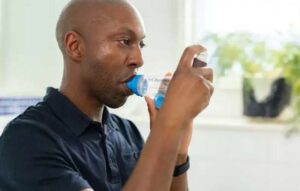
Breathing Easier: Exploring Support for Asthma at the Allergy and Free from Show 2026.
As the Allergy and Free from Show 2026 takes place on the 9th and 10th of May, it provides an important opportunity for Bowen Training UK Ltd to highlight how Bowtech Bowen Therapy may support individuals living with asthma.
For many families, asthma is not just a condition—it is a lived experience filled with moments of uncertainty and fear. On multiple occasions, I have had to call an ambulance for a family member struggling to breathe. In those moments, the sense of panic is overwhelming. There is visible distress in the effort to draw each breath, a discomfort that is difficult to put into words.
Relief arrives with the ambulance crew. Equipped with nebulisers and medication, they begin the vital work of stabilising the body. Gradually, breathing becomes easier. Shoulders begin to drop, the diaphragm relaxes, and the lungs no longer fight for air. Colour returns to the face, and the panic in the eye’s fades. It is a powerful reminder of how essential breathing is—and how fragile it can feel when compromised.
While emergency care is critical in these situations, many individuals with asthma also seek ways to manage their condition day to day. Environmental triggers such as weather changes and air pollution can make symptoms unpredictable, adding to the challenge of living with the condition (WHO, 2026).
This is where complementary approaches like Bowtech Bowen Therapy may offer support. The therapy uses gentle, rolling movements over muscles and connective tissue, aiming to encourage the body’s natural relaxation response. For some individuals, this may help reduce tension in the chest and supporting muscles involved in breathing, potentially promoting a greater sense of ease.
It is important to note that such therapies are not a replacement for medical treatment. However, when used alongside conventional care, they may form part of a broader wellbeing approach for those managing asthma.
Events like the Allergy and Free from Show play a vital role in bringing together professionals, practitioners, and the public to explore both medical and complementary options. They create space for education, discussion, and greater awareness—helping individuals feel more informed and supported in managing their health.
Ultimately, the goal is simple yet profound: to help people breathe a little easier, every day.
| According to the Asthma Statistics Report 2025, (Chemist-4-U, 2026) there could be an estimated ‘434 million people suffering from asthma worldwide’. Within the UK it is estimated that ‘approximately 7.2 million’ people affected or approximately ‘eight in every 100 people’. |
| (Asthma +Lung UK, 2026
| Symptoms:Common asthma symptoms range from coughing, wheezing, and shortness of breath to asthma attacks and sometimes death (Asthma + Lung UK, 2026).
You may have all or just some these signs and symptoms but call 999; they can treat your asthma on the way to the hospital. |
According to the World Health Organisation (2026) ‘Asthma is a major noncommunicable disease (NCD), affecting both children and adults, and is the most common chronic disease among children’. The WHO (2026) states that the most asthma related deaths occur in ‘low and lower-middle income countries due to under diagnosis and under treatment’. Asthma is defined as the inflammation and narrowing of the small airways in the lungs causing asthma symptoms.
One of the Bowen Therapy procedures that is used is known as the ‘Respiratory Procedure’ and can offer support with both managing asthma symptoms and in the event of an asthma attack. Bowtech Bowen Therapy is a light touch, non-manipulative bodywork that people can use alongside medical treatment for asthma and other respiratory concerns and is one reason people explore Bowtech Bowen Therapy for assistance with respiratory conditions because it can be carried out on targeted areas of the body to encourage a release or realignment. Bowtech Bowen Therapy encourages a body to be in ‘rest and repair’ mode (often known as the parasympathetic nervous system), rather than ‘fight or flight’, therefore, when your system feels less guarded, breathing can sometimes feel easier. The Respiratory Procedure itself is also effective for anxiety, panic attacks, hiccups and coughing. It is suitable to use on newborns, children and adults.
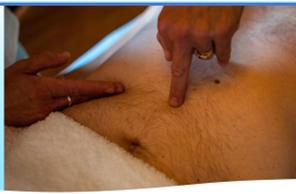
The Respiratory Procedure involves other areas linked with the digestive tract and since tension and comfort through the abdomen can influence also influence the body and the associated functions. The moves (3-5) used in assisting respiratory conditions are made over the stomach, hepatic, splenic flexures of the large intestine, with the liver itself being affected. This explains why this Respiratory Procedure can also assist digestive complaints. If a full Respiratory Procedure is being carried out (not just the ‘asthma emergency move’), then practitioners will start on the upper back with moves over the erector spinae, trapezius, rhomboids and the levator scapulae muscles.
The lateral moves (1-2) appear to have an energetic effect on the lungs which could be due to the moves addressing the sympathetic nerve supply to the lungs and other muscles used in breathing. The diaphragm is the focus for the remaining moves (including ‘move 5’ on the xyphoid process) are carried out when the client is supine.
The holding point (as shown above) is vital to keep the vibrations focused within this area, with the actual moves performed over the attachment sites of the anterior diaphragm and the transverse abdominis muscle lying beneath. Furthermore, the intercostal muscles are also affected and assist with respiration.
Here we see move 5 being performed, however, when used as the ‘emergency move’, a person will be sitting and therefore the thumb is used to do this one move.
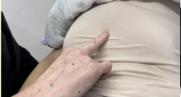
Bowen practitioners can teach anyone who suffers with asthma or panic attacks how to carry out this final, ’emergency’ move. This is used as a focused supportive move but is never a substitute for following emergency medical care. It can be used toassist breathing whilst waiting for the ambulance to arrive, or to lesson a panic attack whilst further assistance is called for.
NB: If a person or child is too breathless to talk, using accessory muscles of respiration, has a silent chest – without wheezing, or their lips are turning blue, then dial 999.
While experiences can vary Bowtech Bowen Therapy may be considered as part of a complementary approach to supporting overall wellbeing and respiratory health. Below are a variety of case studies and personal experiences of clients and the response to using the Respiratory Procedure with asthma:
Asthma + Lung UK, (2026).’Asthma’. Available At: https://www.asthmaandlung.org.uk/conditions/asthma
Chemist-4-u (2026). ‘Asthma Statistics Report’. Available At: https://www.chemist-4-u.com/guides/research-insights/asthma-statistics
World Health Organisation (2026) ‘Asthma Factsheet’. Available At: https://www.who.int/news-room/fact-sheets/detail/asthma